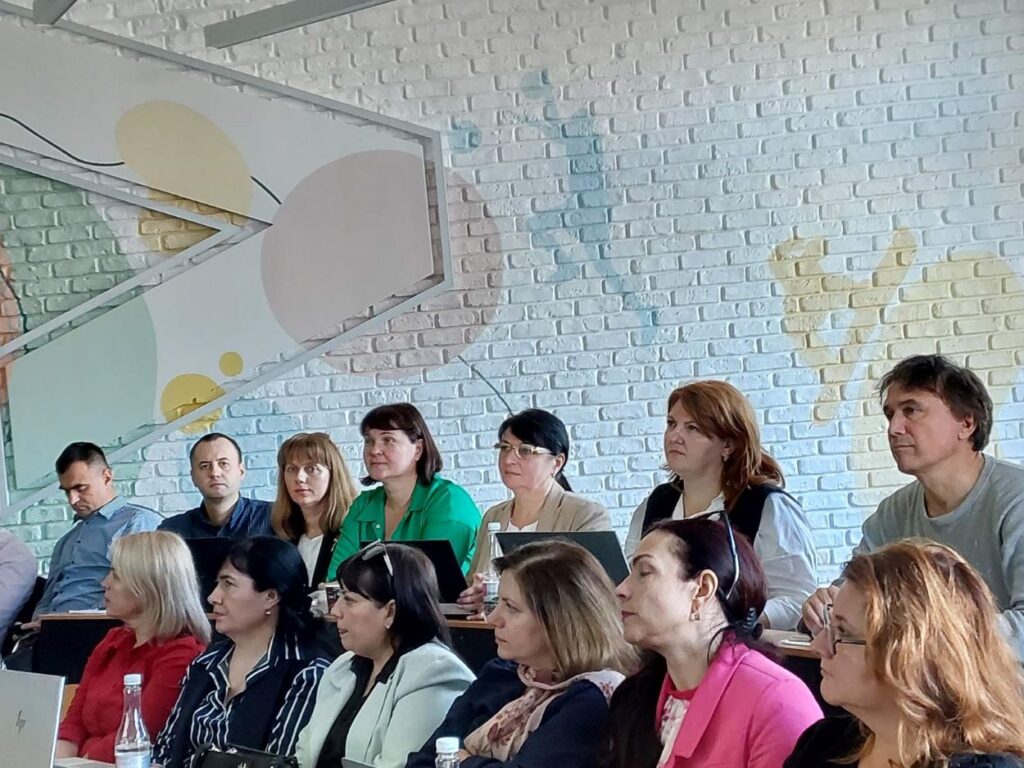
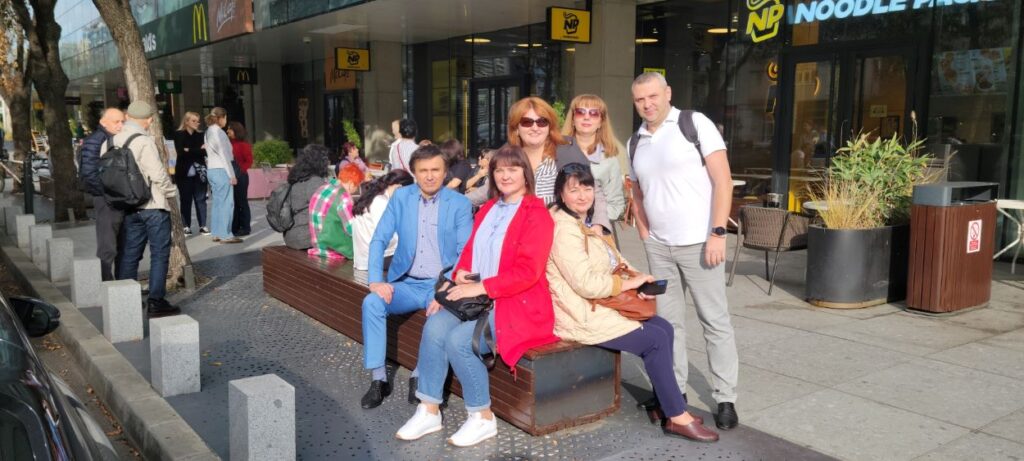
The second round of the Training of Trainers (ToT) session for academic staff from Moldova’s universities took place from October 7 to 11, 2024, under the Erasmus+ Capacity Building in Higher Education project “Skills4Future”. The event, titled “Education for Sustainability and Innovation in HEI Systems,” was held at the Academy of Economic Studies in Bucharest, Romania. The training aimed to enhance the capacity of higher education institutions to integrate sustainability and innovation into their curricula and operations, aligning with global sustainable development goals.
The Technical University of Moldova was represented at this event by a dedicated team of professors, including Prof., Dr.hab. Aurelia LITVIN, the institutional project coordinator, along with Assoc. prof., Dr. Rina TURCAN, Assoc. prof., Dr. Rafael CILOCI, Assoc. prof., Dr. Ala OBERST, Assoc. prof., Dr. Iuliu TURCAN, and vice-dean Marcela BOTNARU. Their participation contributed to the exchange of ideas and experiences, furthering discussions on the integration of sustainability and innovation into higher education
The five-day event brought together participants eager to develop new approaches to sustainability, enhance their teaching methods, and gain practical knowledge from both academic sessions and study visits to leading companies. The training emphasized interdisciplinary learning, responsible business practices, and the critical role of technology in fostering sustainability. These topics were explored through a series of expert-led modules and immersive visits to key institutions in Bucharest.
The event opened with a welcome session, outlining the objectives of the training. The first module, led by the project coordinator, Prof. Dr. Elena FLEACA from the University Politehnica of Bucharest, focused on “Education for Sustainability.” Participants explored interdisciplinary learning approaches and how these methods can transform traditional education systems. One of the core themes of the training was the transformation of traditional education systems through interdisciplinary learning. Prof. Dr. Marta SUCIU from the Academy of Economic Studies opened discussions by exploring the concept of interdisciplinary learning and how it can transform traditional education to address global challenges. Participants also delved into practical decision-making techniques for sustainable growth. Prof. Grigore PIROSCA of the Academy of Economic Studies discussed the importance of preventing crises and conflicts througheffective decision-making processes, linking this to global sustainability efforts.
Additionally, several key speeches highlighted the importance of applying sustainability in various sectors. PhD Joanna KOPANIA from the Technical University of Lodz, Poland, delivered an engaging presentation on how to familiarize students with enterprise sustainability development, providing practical strategies to incorporate sustainability into business education. PhD Bianca CIBU from the Academy of Economic Studies presented a thought-provoking session on school dropout research, shedding light on the role educational institutions can play in mitigating this issue to support broader socio-economic development. Another essential topic addressed during the event was the role of financial education in promoting sustainability. PhD Bianca MOTORGA presented on the significance of financial literacy in making rational consumption and investment decisions, drawing connections between informed financial behavior and sustainable development. PhD Aleksandra MAKOWSKA from the Technical University of Lodz, Poland, delivered an inspiring session on the different ways to influence students’ awareness and knowledge of sustainability, offering insights into how educators can encourage students to become sustainability advocates within their fields.
In addition to the academic sessions, participants visited several leading companies where they learned about how sustainability is practiced across industries. Notable visits included Hewlett Packard Enterprise, where participants explored responsible business practices in the IT sector, and the Bucharest Stock Exchange, which provided insights into sustainable financial practices. The visit to Genpact showcased the role of Artificial Intelligence in driving sustainable growth, while a tour of Ateneu Company offered a closer look at how sustainability is integrated into the media and communications industry.
Throughout the training, participants were introduced to diverse perspectives on sustainability and innovation, including green economy strategies, decision-making techniques, and the multidimensional nature of sustainable growth. These insights culminated in a deeper understanding of how higher education institutions can play a crucial role in advancing sustainable development goals.
The successful execution of this training marked a significant step forward in enhancing the professional capacities of academic and administrative staff from Moldova. By equipping participants with the tools and knowledge necessary to implement sustainability-focused education, the Skills4Future project is helping to ensure that higher education institutions in Moldova are well-positioned to contribute to sustainable development at both local and global levels.